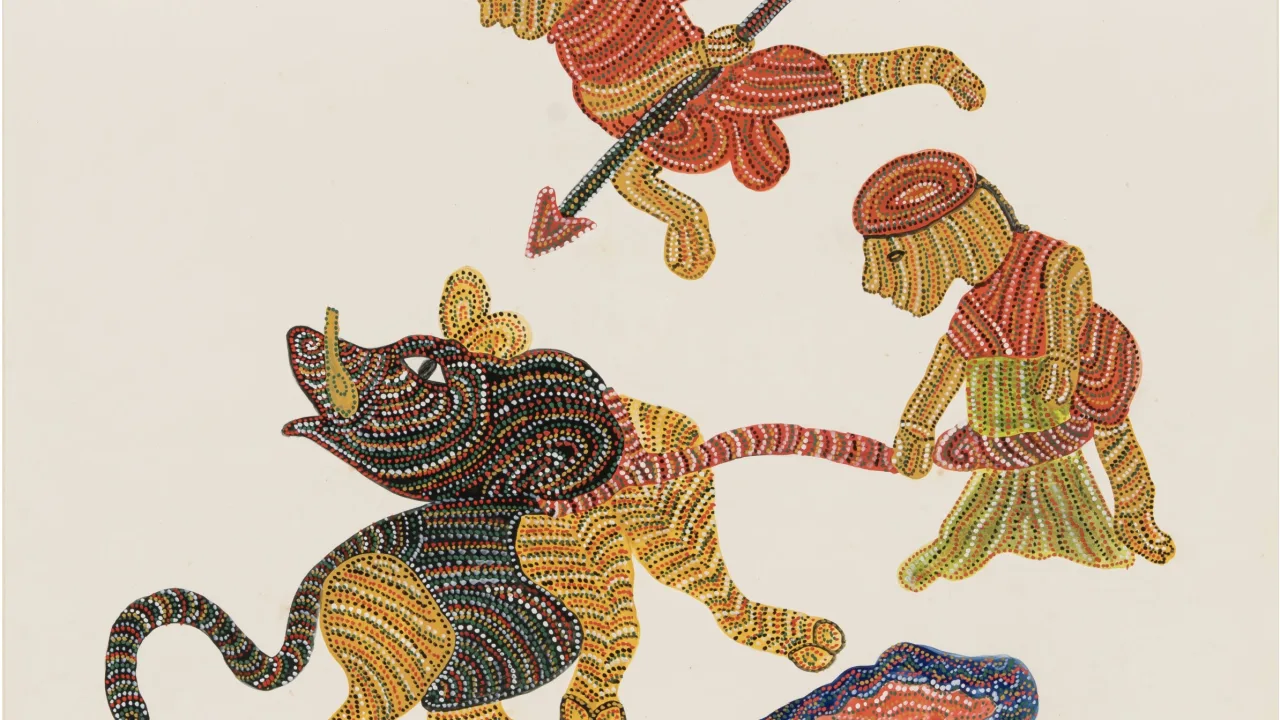
Jangarh Singh Shyam was an artist from the Gond-Pardhan community who challenged the binary between ‘folk’ and ‘modern’ art in India. While his work is rooted in indigenous and craft traditions, he defined a highly expressive individual style that came to be known as “Jangarh Kalam”. Working on paper and canvas, Jangarh developed an extraordinary archive of work over his twenty-year career that brought his imagination vividly to life. Through vibrant colours and intricate line work, he illustrated vast worlds inhabited by humans, gods, demons, forest spirits, and animals, demonstrating mastery in his visual storytelling.
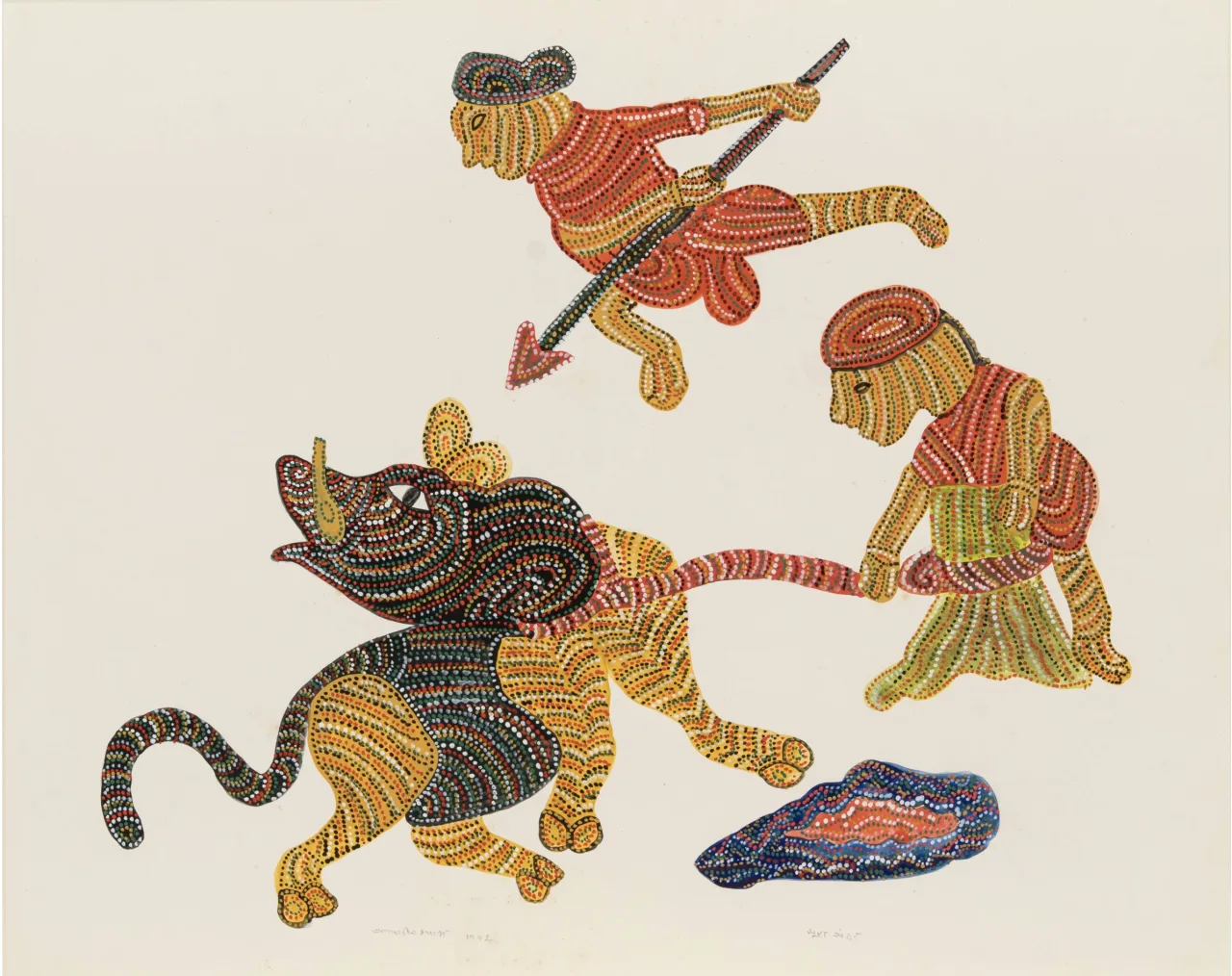
Jangarh was raised in Patangarh, a remote village in Eastern Madhya Pradesh, as part of an Adivasi or tribal community. He took to drawing from an early age, working on neighbours’ walls in natural materials like charcoal, mud, and natural dyes. At age 19, Jangarh was “discovered” by artist Jagdish Swaminathan, who was looking for anonymous craftspeople to join him at Bharat Bhavan in Bhopal. Jangarh took a permanent role there, where he experimented with new mediums and continued to develop his artistic voice. He was particularly thrilled by the bright poster colours he encountered, which he later said sent “tremors through his body” the first time he used them.
Jangarh gained considerable commercial and critical success in his lifetime, and was honoured with the Shikhar Samman (the highest civilian award from the Government of Madhya Pradesh). One of his most notable exhibitions was Other Masters at the Crafts Museum, New Delhi, where he worked alongside his sister and mother to create replicas of traditional clay relief work from his village. His international debut was a show called Magiciens de la terre (Magicians of the Earth) at Centre Pompidou in Paris, but he also exhibited widely across the UK, US, Japan, and other parts of Europe.