
Commercial entities that are criticised for fuelling speculation when prices soar and quietly (and sometimes not so quietly) blamed when the inevitable corrections follow. Yet this fixation on “booms” and “busts” obscures a more fundamental question: beyond the drama of the market, what role do auction houses actually play?
Whether acknowledged or not, auction houses are key players in constructing the market as well as reflecting it, but is that the limit of their contribution? Over the past two decades, auction houses have been instrumental in bringing Indian art and Indian artists to global attention. They decide which artists get seen by a wider audience, how Indian art is positioned, interpreted, and remembered. Their influence extends far beyond the hammer price, reaching into issues of reputation, historical narrative, and cultural access.
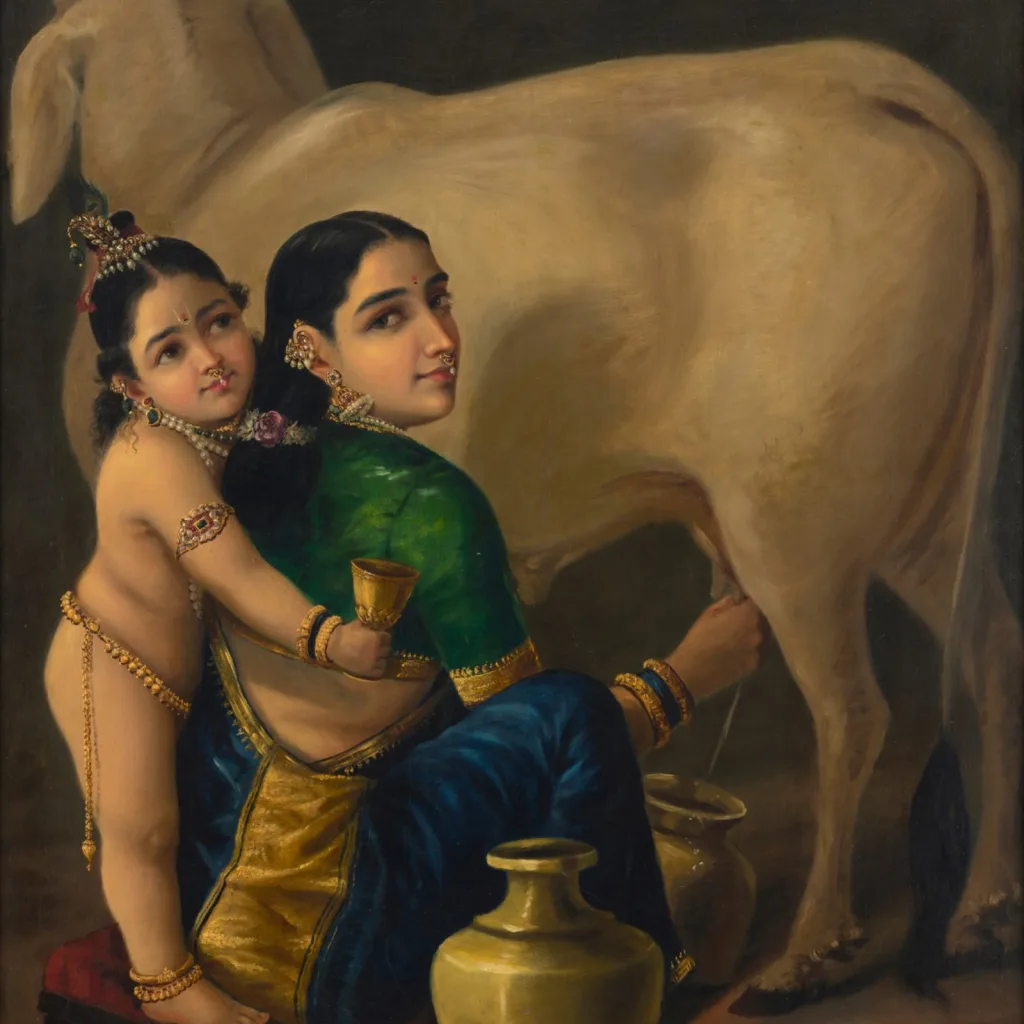
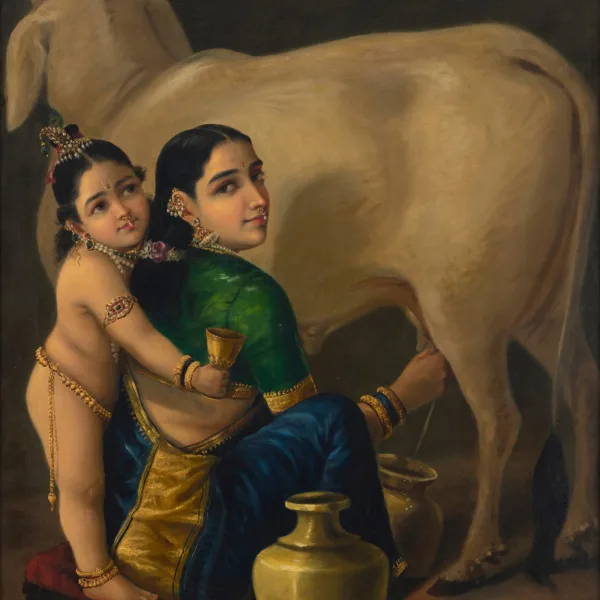
Few examples make this clearer than Raja Ravi Varma. Anyone who has stood before his paintings will understand how extraordinary they are. These are works of ambition and technical mastery, capable of holding centre stage in any major international museum. Yet for years, Varma remained curiously under-recognised outside of India beyond specialist circles. That changed with a recent, record-breaking sale by the Indian auction house Saffronart. The result instantly propelled Varma’s name into an international conversation, and whether the new owner will find a way to put it on public view in India.
What such moments reveal is how auction houses act as amplifiers. A single sale can create new audiences and reframe an artist’s place in history. But much of their influence operates more quietly. Auction houses commission research, build archives, train specialists, and create professional pathways that have few equivalents within India’s still-developing institutional landscape. Their preview exhibitions often provide rare public access to works that might otherwise remain hidden in private collections.
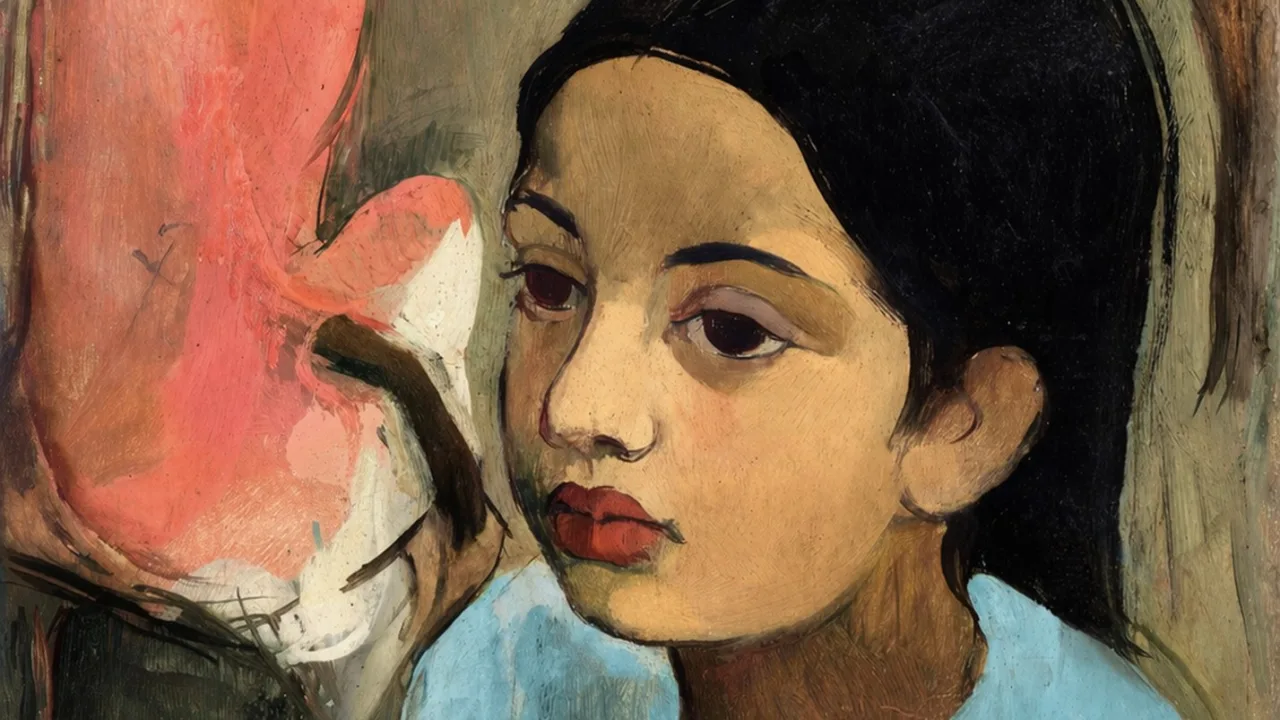
Admittedly, these spaces can feel intimidating. There is a strong case for greater openness and exploring alternative preview models. Yet when these exhibitions succeed, they can be compelling. Amrita Sher-Gil’s The Little Girl in Blue at Bikaner House in Delhi (2018), or Bhupen Khakhar’s Untitled (Man Frying Jalebis) in London (2020), demonstrated how a single work, encountered outside a formal museum context, can completely command a room.
The expansion of online platforms has also reshaped the sector. Saffronart, the brainchild of Minal and Dinesh Vazirani, has been at the forefront of this shift, demonstrating how technology can broaden access and reshape who gets to see and buy Indian art. While digital formats cannot replace the experience of standing in front of a painting, they have undoubtedly widened the audience and increased accessibility. More recently, the Vaziranis have expanded into art fairs, leveraging their long-standing client relationships for the benefit of the commercial galleries through Art Mumbai.
Auction houses also play a crucial role within the wider commercial ecosystem. They draw collectors towards contemporary art, commercial galleries, and art fairs. This requires time as well as investment. What is less often acknowledged is the sheer hard work that underpins their activities: the research, exhibition making, building client relationships, and the logistics required to bring a sale together. To focus solely on prices is to overlook the expertise and pressure involved in orchestrating these events.
Spend time observing auction-house professionals, and it quickly becomes clear that they are far more than salespeople. They are specialists whose knowledge and judgement shape careers, reputations, and, ultimately, art history itself.
This expertise is embodied in the specialists themselves. On the international scene, figures such as Nishad Avari (supported by Damian Vesey) at Christie’s and Manjari Sihare-Sutin at Sotheby’s currently play influential roles in shaping both the market and the international narrative around Indian art. Building on the work done by the likes of Hugo Weihe, Sonal Singh and Yamini Mehta. On a smaller scale, Priya Singh at Bonhams in London represents a newer generation of auction professionals: rigorous, independent, and quietly effective in a sector that can on occasion prioritise spectacle over substance. Meanwhile in India, with the formidable Mallika Sagar (who is also the India Premier League’s primary auctioneer) behind the gavel, long-standing house Pundole’s in Mumbai remains a class act for its local expertise, exquisite (and dare I say collectable) catalogues, strong local relationships and growing international reach.
So, friend or foe? It is a tricky one. Auction houses exist at the intersection of commerce and culture. They expand visibility while reinforcing hierarchies; they commodify art even as they help preserve and promote it. Nonetheless, certainly, where India is concerned, making them indispensable.